

What does a warranty actually cost an importer?
The visible cost is the replacement unit. The larger costs sit around it: inbound and outbound freight on a return, inspection labour, a credit note to a retail customer, a spare-parts inventory that must be held for years, and the staff time spent deciding whether a fault is a manufacturing defect or misuse. A small change in the return rate can move a seasonal programme from profit to loss, which is why the warranty term belongs in the costing sheet and not only in the artwork.
| Cost line | What drives it | Where it is controlled |
|---|---|---|
| Replacement units | Defect rate and the length of the warranty period | Specification, inspection and defect definitions |
| Two-way freight | Return route, packaging and lithium transport rules | Reverse logistics clause and a local replacement pool |
| Inspection and testing | Whether every return must be diagnosed | An agreed evidence set and a sampling rule for bulk claims |
| Spare parts inventory | How long parts must remain available | Availability clause and a first-order parts quantity |
| Retail credits and chargebacks | How fast a claim is settled | A claim timeline and a credit mechanism |
| Brand and review damage | Repeated failures in one batch | Batch traceability and a recall route |
What belongs in a warranty service agreement?
Treat it as a short operating procedure with commercial consequences. It should say which entity handles consumer claims, the warranty period by product and component, what evidence a claim needs, how a supplier credit is calculated, who pays return freight, and how quickly a decision is made. Attach it to the purchase order annex so that it applies to the specific batch rather than floating as a general policy.
- Scope: the covered models, the period, and any separate terms for the battery, charger, cable and accessories.
- Evidence: model number, batch or carton reference, a description of the failure and a photograph or short video.
- Settlement: replacement, credit against the next order, or a spare part, with a stated decision deadline.
- Freight: who arranges and pays for the return, and whether a local replacement pool avoids a cross-border return altogether.
- Bulk claims: a threshold and a joint investigation method when defects cluster in one batch.
- Continuous improvement: a quarterly defect review that feeds the next purchase order annex.
How should spare parts be planned for the first container?
Start from the parts that fail or get lost rather than from a flat percentage of order value. For this category, the usual candidates are charging cables, clamps, adapters, cases, lens or diffuser parts and the battery pack itself. Ask the supplier which components have their own lead time, which require a dangerous-goods shipment, and which must be ordered with the production run because they will not be stocked afterwards.
| Part | Reason it is needed | Planning question |
|---|---|---|
| Charging cable and adapter | Lost, damaged or separated from the unit | Is the plug standard specific to this market? |
| Clamp and cable set | Wear at the terminals and cable strain | Is it a replaceable assembly or bonded into the unit? |
| Battery pack | Capacity loss or a protection-board fault | Can it ship separately, and under which UN number? |
| Case, lid or lens part | Drops and retail handling damage | Is the part available after the production run ends? |
| Manuals and rating labels | A replacement unit needs compliant documentation | Which artwork revision matches this batch? |
How are lithium returns handled differently?
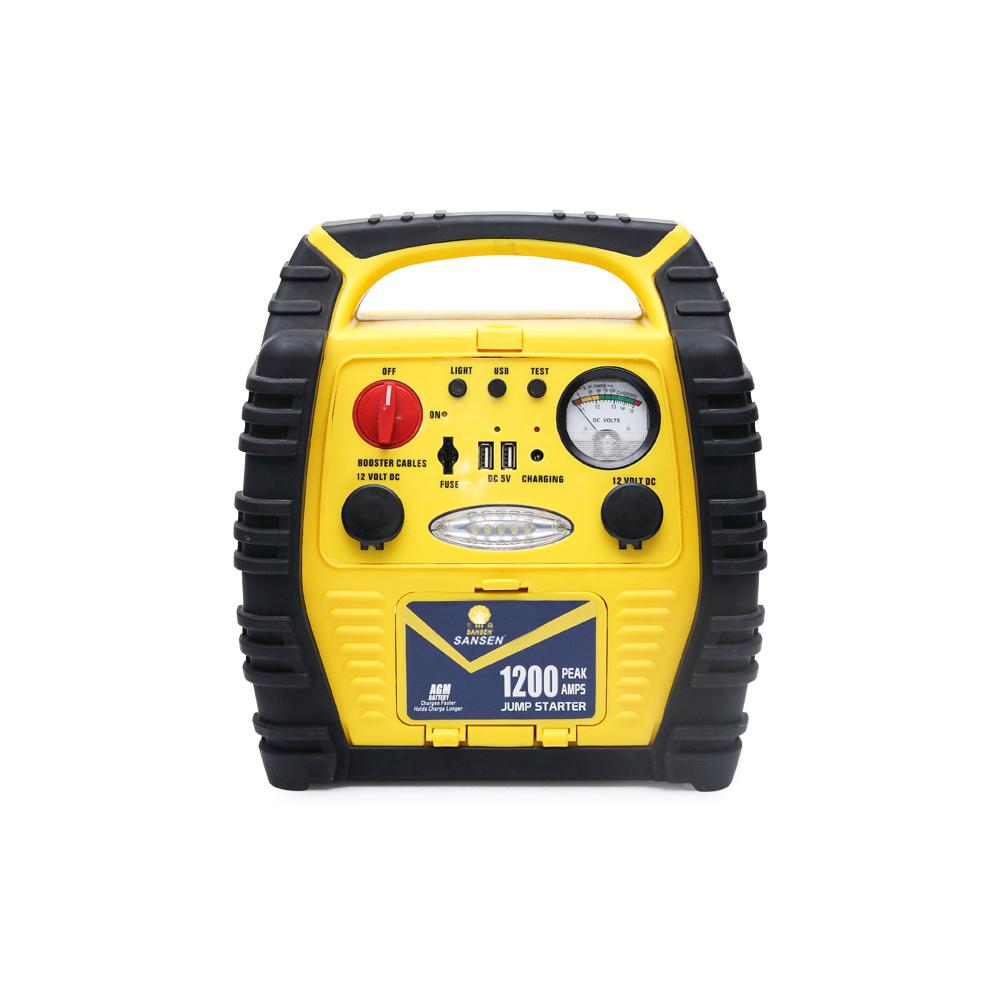
A returned jump starter is still a lithium battery, and a damaged one may be a higher-risk consignment than a new one. Return shipments need the correct classification, packaging, state-of-charge handling and carrier acceptance, and a swollen or damaged pack is subject to additional restrictions. This is why many importers prefer a local inspection and replacement pool over shipping individual units back to China. Write the route into the warranty agreement before the first complaint arrives.
- Define who inspects the returned unit locally and who decides whether it is safe to transport.
- Specify the packaging and documentation for any cross-border return, with the forwarder named.
- Agree that a damaged or swollen pack is not shipped back through ordinary parcel channels.
- Provide a safe disposal or recycling route compliant with the destination market rules.
How do you define a defect before there is a dispute?
Use classes and examples, not adjectives. A critical defect is a safety issue; a major defect stops the product performing its main function; a minor defect is cosmetic or does not affect use. For each class, state the evidence required and the remedy. Include a short list of exclusions that both sides accept, such as an incorrectly attached clamp, an over-inflated tyre or a unit opened by the user, and require the supplier to justify an exclusion with a photograph or test result.
| Class | Example in this category | Evidence | Usual remedy |
|---|---|---|---|
| Critical | Overheating, a damaged cell, or a protection circuit that does not trip | Photograph, batch reference, and a quarantined unit | Quarantine the batch and open a joint investigation |
| Major | Unit will not start a vehicle under the agreed test condition, or auto-stop fails | Test record with the stated conditions | Replacement or credit against the next order |
| Minor | A scuffed case or a misaligned label | Photograph at receipt | Spare part or a small credit |
| Excluded | Misuse, incorrect terminal order, or a user-modified unit | Photograph and a short diagnostic note | Out of warranty, with an explanation to the customer |
What should the batch traceability and recall clause say?
It should let you move from one complaint to one production run in a single step. Require a batch or carton reference on the unit and the retail carton, a shipment file that ties the batch to its test records and component list, and a named contact at both companies for a safety issue. Add a decision timeline for a recall or stop-sale, and state how the cost is shared when a defect is confirmed as manufacturing-related.
- A batch reference printed on the rating label and repeated on the outer carton and packing list.
- A shipment file containing the configuration list, test records, inspection report and artwork revision.
- A named escalation contact on both sides and a stated response window for safety issues.
- An agreed method for isolating affected stock and for a stop-sale or recall decision.
- A quarterly defect review that turns claims into changes in the next purchase order annex.