Product knowledge9 min readPublished 2026-11-13By the Karlead sourcing team
Portable tire inflator specs: how to read PSI, inflation time and auto-stop
Almost every portable inflator in a catalogue claims the same maximum pressure. The difference shows up in how long it takes to get there, how many tyres it can finish on one charge, and whether the cut-off stops at the pressure printed on the display. Those are the three numbers worth putting into a purchase order.
The short answer
Maximum PSI is a ceiling, not a speed. Insist on inflation time quoted against a named reference tyre and a starting pressure.
Cylinder diameter, battery capacity and duty cycle together determine how many tyres a unit finishes before it needs a rest or a recharge.
Auto-stop accuracy is a test result, not a feature list item. Check it against a calibrated gauge on the incoming sample.
Compare carton quantity and gross weight as well as unit price: they change the landed cost per retail unit.
The four numbers on an inflator data sheet
Spec line
What it tells you
What it does not tell you
Pressure range
The working window of the pump and the gauge units offered
How fast it reaches the target, or how accurately it stops
Inflation time
Time to inflate a named reference tyre under stated conditions
What happens on a larger tyre, or after the unit is warm
Cylinder diameter
A proxy for air volume per stroke
Real airflow, which also depends on motor speed and gearing
Battery capacity or supply
Whether the unit is cordless, DC12V, or part of a multi-function unit
How many tyres remain after the first one
A data sheet with only a pressure range and a photo is a consumer listing, not a sourcing specification.
Inflation time is meaningless without the reference tyre
Our AC-001 data sheet states 9 min 30 s for a 195/65/R15 car tyre, with 1.5 tyres per charge and a 17 mm cylinder. AC-6188 lists 5 min for the same reference tyre with a 22 mm cylinder. Those two lines are comparable because the reference tyre is named. A claim of "fast inflation" with no reference tyre is not comparable with anything.
Model
Pressure range
Cylinder
Inflation time (195/65/R15)
Tyres per charge
Power
AC-001
3-150 PSI / 0.2-10.3 BAR
17 mm
9 min 30 s
1.5
7.4 V lithium, 2000 mAh x 2
AC-0013
3-150 PSI / 0.2-10.3 BAR
17 mm
9 min 30 s
1.5
7.4 V lithium, 2000 mAh x 2
AC-6188
3-150 PSI / 0.2-10.3 BAR
22 mm
5 min
Listed on the model sheet
DC12V in-car / 11.1 V battery version
AC-2001
3-150 PSI / 0.2-10.3 BAR
19 mm
8 min
3
14.8 V jump starter, 2000 mAh x 4
Catalogue values from the model data sheets. Always confirm the current revision with the quotation, because packaging and battery versions change.
Auto-stop accuracy, gauge units and the display
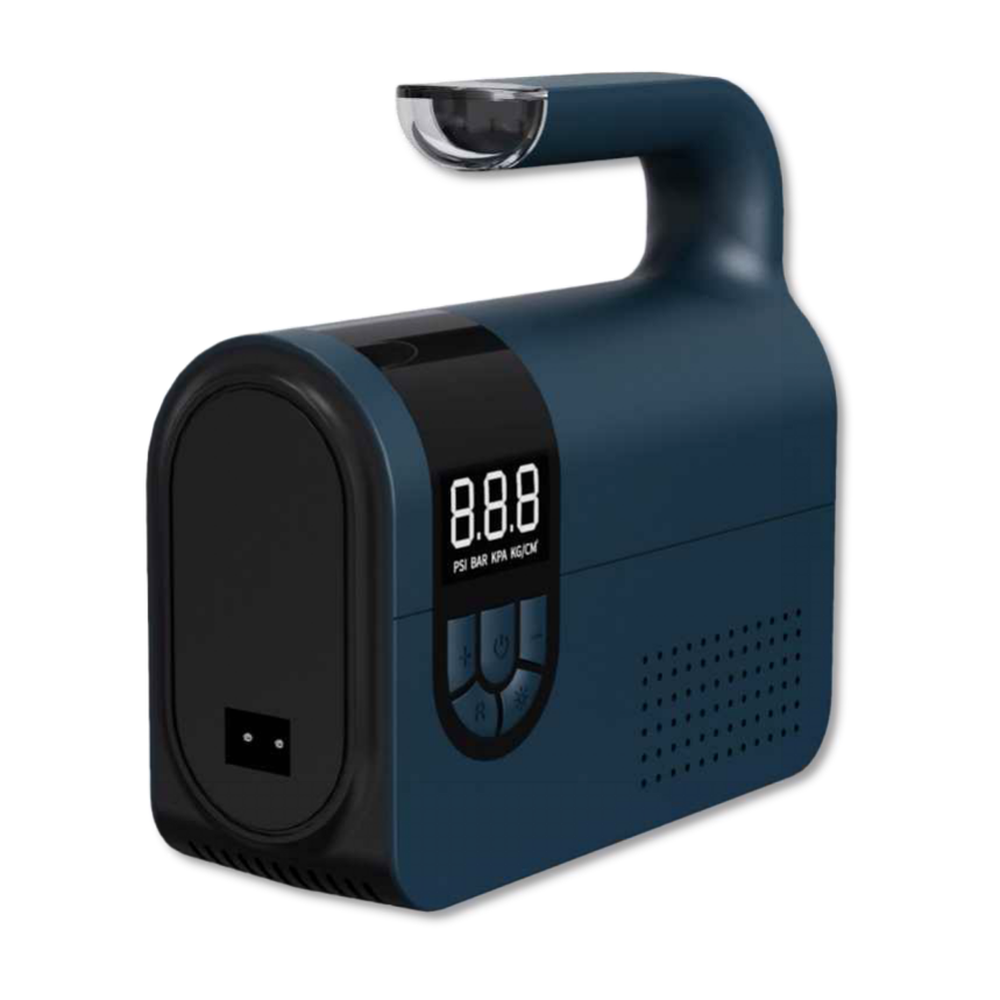
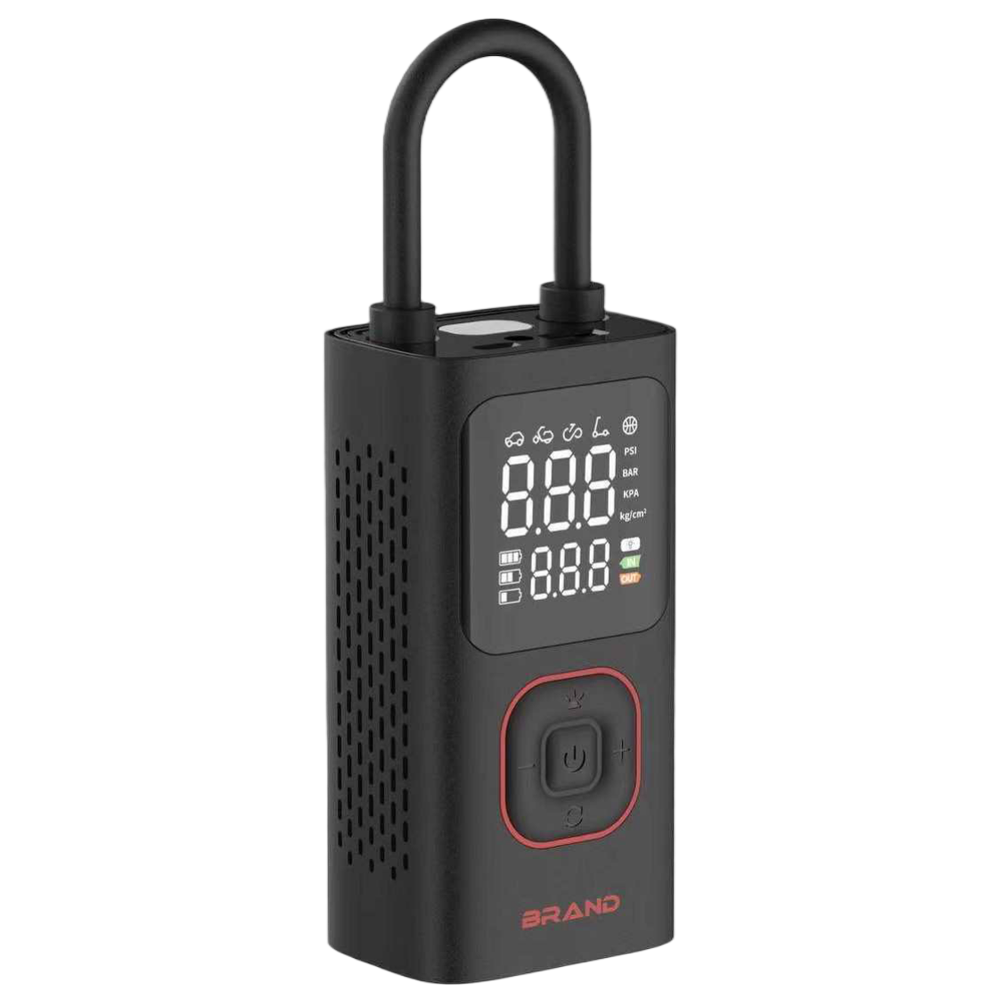
Our AC-001 and AC-0013 sheets list PSI, BAR, KPA and Kg/cm² as selectable units. Confirm which unit is the default at power-on for your market, and whether the manual explains the others.
Test the cut-off against a calibrated gauge at three targets: low, mid and near the top of the range. Record the deviation, not just a pass or fail.
Check what happens when the target is reached while the hose is still attached, and whether the unit resumes automatically if pressure falls.
Ask whether the pressure sensor is a separate component with its own calibration record, and how a drift is corrected in a production run.
Lithium, DC12V or a jump-starter combination
Power architecture
Best fit
Buyer check
7.4 V lithium, cordless
Retail, e-commerce, emergency kits, bicycle and motorcycle use
Real tyres per charge, charging connector, lithium transport documents
DC12V in-car
Workshop, fleet, drivers who keep the engine running
Cable length, fuse, current draw, behaviour at low battery voltage
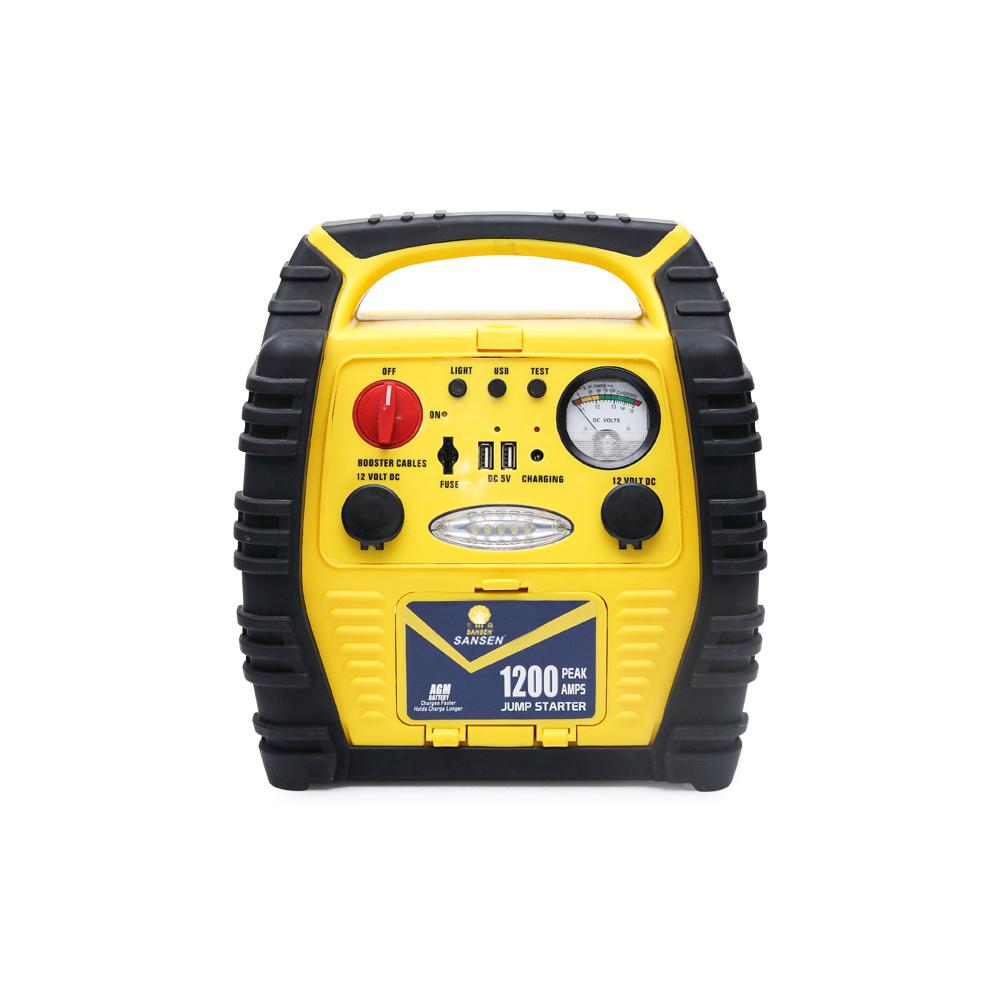
Jump starter with built-in compressor
Premium roadside bundles and multi-function displays
Compressor tested separately from cranking; heat after repeated use
The best-selling configuration in a short-form video is often the cordless one; the best-selling configuration in a workshop catalogue is often the DC12V one. Pick for the channel.
Noise, heat and duty cycle: the test a data sheet omits
A small compressor gets hot. What matters commercially is whether the unit finishes a second tyre without a thermal cut-out, and what the user hears while it does. Neither appears in a four-line parameter sheet, so both belong in your sample protocol.
Inflate the reference tyre from the stated starting pressure and log the time, the final pressure and the housing temperature.
Immediately repeat on a second tyre and log whether a thermal cut-out interrupts the run.
Measure noise at a fixed distance with the unit on a hard surface and on a carpet, because retail complaints often come from the hard-surface case.
Cycle the unit through the agreed number of charge and discharge rounds, then repeat the first test and compare the times.
Carton maths that changes the landed cost
Model
Net weight
Colour box
Pcs per carton
Carton size
Carton weight
AC-001
0.41 kg
90 x 72 x 148 mm
24
38 x 23 x 31.5 cm
13 kg
AC-0013
0.395 kg
93 x 74 x 157 mm
24
30.7 x 29.5 x 35.3 cm
13.5 kg
Two units with nearly identical performance figures pack differently. Model the freight on the carton, not on the unit.
What to put in the RFQ
The exact pressure range and available gauge units, with the default unit for your market.
Inflation time and tyres per charge tied to a named reference tyre and starting pressure.
Cylinder diameter, motor type, hose length, nozzle set and included adapters.
Auto-stop tolerance at three target pressures, measured against a calibrated gauge.
Battery version, charging connector, carton quantity and carton dimensions.
Manual language, artwork version and the test record that ships with the order.
If you plan to advertise a "150 PSI" inflator, confirm that the claimed maximum is a working range with an auto-stop target, not an unreachable ceiling. Retailers ask for the same evidence you should be asking for.
Frequently asked questions
Does 150 PSI mean an inflator is fast?
No. It is the upper end of the working pressure window. Speed is a separate line: AC-001 quotes 9 min 30 s for a 195/65/R15 tyre, while AC-6188 quotes 5 min for the same reference tyre. Ask for both the range and the timed test.
Why do two inflators with the same battery take different times?
Cylinder diameter, motor speed, gearing and hose restriction all change airflow. AC-001 lists a 17 mm cylinder, AC-6188 a 22 mm cylinder, and AC-2001 a 19 mm cylinder. Treat the cylinder figure as one input, then verify with a timed test.
How many tyres can a cordless inflator finish on one charge?
Ask for the figure tied to a named reference tyre. The AC-001 data sheet lists 1.5 tyres per charge for a 195/65/R15, and AC-2001 lists 3. Your own test should use the tyre size common in your market rather than the catalogue reference.
How do I test auto-stop accuracy?
Set three targets across the range, inflate against a calibrated independent gauge, and record the deviation at each. Repeat after the unit is warm. A supplier who can share the sensor calibration approach will usually be able to hold the tolerance in production.
Should I stock a cordless or a DC12V model?
Cordless suits retail, e-commerce and emergency kits; DC12V suits workshop and fleet channels where the vehicle is running anyway, as with the in-car version of AC-6188. Many importers list both and use a multi-function unit as the premium tier.
What causes a thermal cut-out during a second tyre?
A small compressor close to its duty limit. Ask for the duty cycle in writing, and test two consecutive inflations on the sample. If the second run is interrupted, decide whether the product is a single-tyre emergency item or needs a larger cylinder.
Which accessories should be included in the retail box?
Agree the hose length, the nozzle set, the charging cable, the storage pouch and the manual language on the golden sample label. Missing adapters are one of the most common causes of retail returns on this category.
Do cordless inflators need lithium battery documents?
Yes when the unit contains a lithium pack and travels by air or under a lithium-specific sea route. Confirm the chemistry on the quotation, then ask your forwarder which documents are required before the order is booked.