What the Ningbo cluster actually gives you
A supplier based in Yuyao can source housings, motors, PCBA and battery packs locally, which shortens tooling and resupply. The risk is the opposite side of the same coin: components move between workshops, so two suppliers quoting an identical housing may be using different cells, different protection boards and different cable gauges. Ask for the bill of materials, not just the specification sheet.
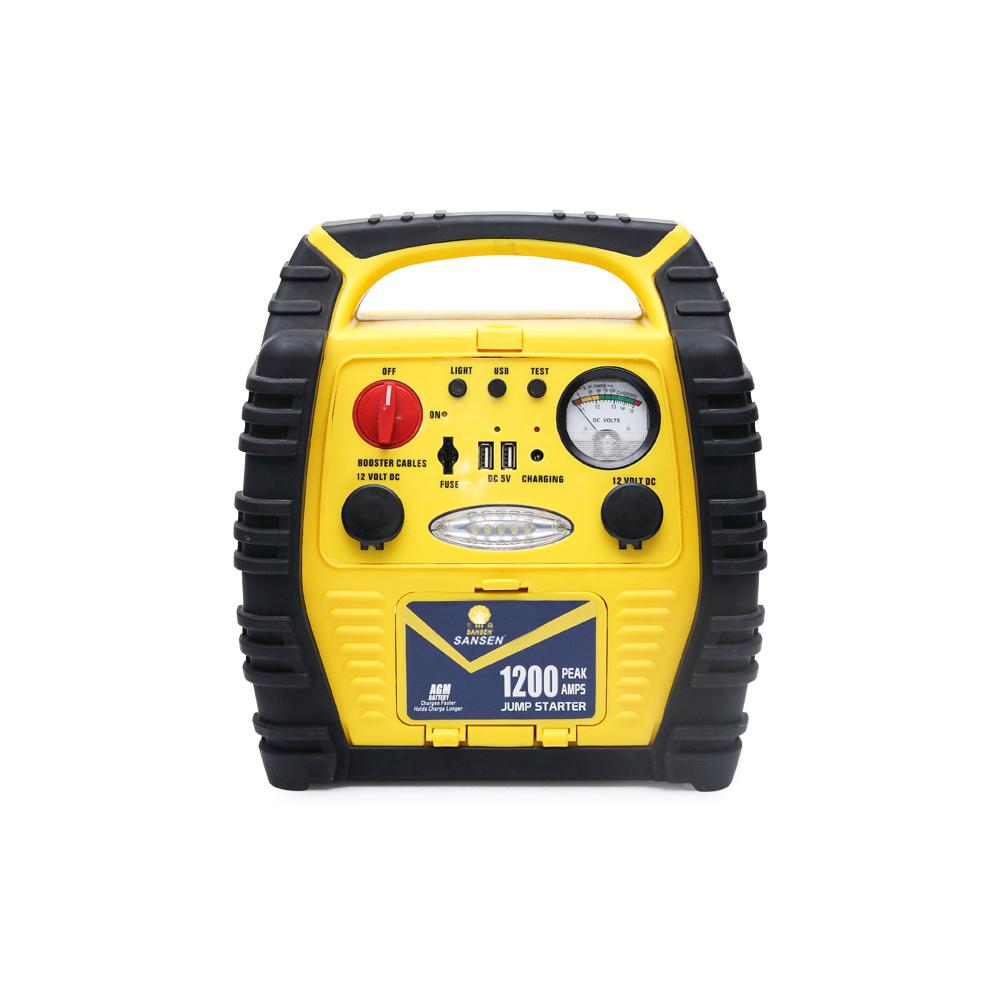
Specifying a jump starter
| Specification | Why it matters | What to ask for |
|---|---|---|
| Peak amps | A surge figure measured for milliseconds; easy to inflate | The test method and the duration behind the number |
| Battery capacity (Wh) | Determines how many starts and how much standby | Wh, not mAh alone, plus cell chemistry |
| Clamp cable gauge | Thin cable overheats and drops voltage under load | Cross-section in mm², and cable length |
| Protection board | Reverse polarity, short circuit, over-discharge | Which protections, and whether they are tested per unit |
| Operating temperature | Cold-climate markets see reduced capacity | Discharge performance at the low end of your market |
A simple discipline: ask two suppliers for the same three numbers — Wh, cable cross-section and protection list — and compare those before comparing price. The quotation with the lower price and the thinner cable is not a cheaper product; it is a smaller one.
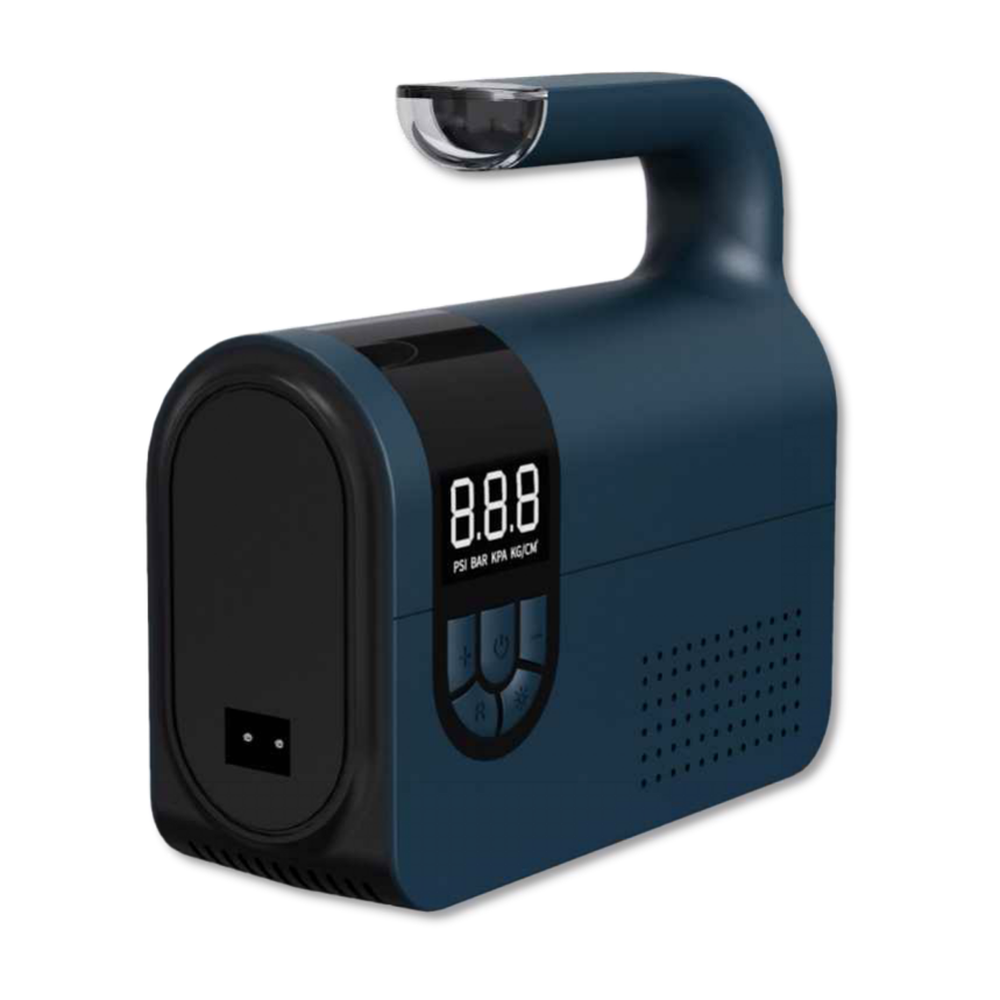
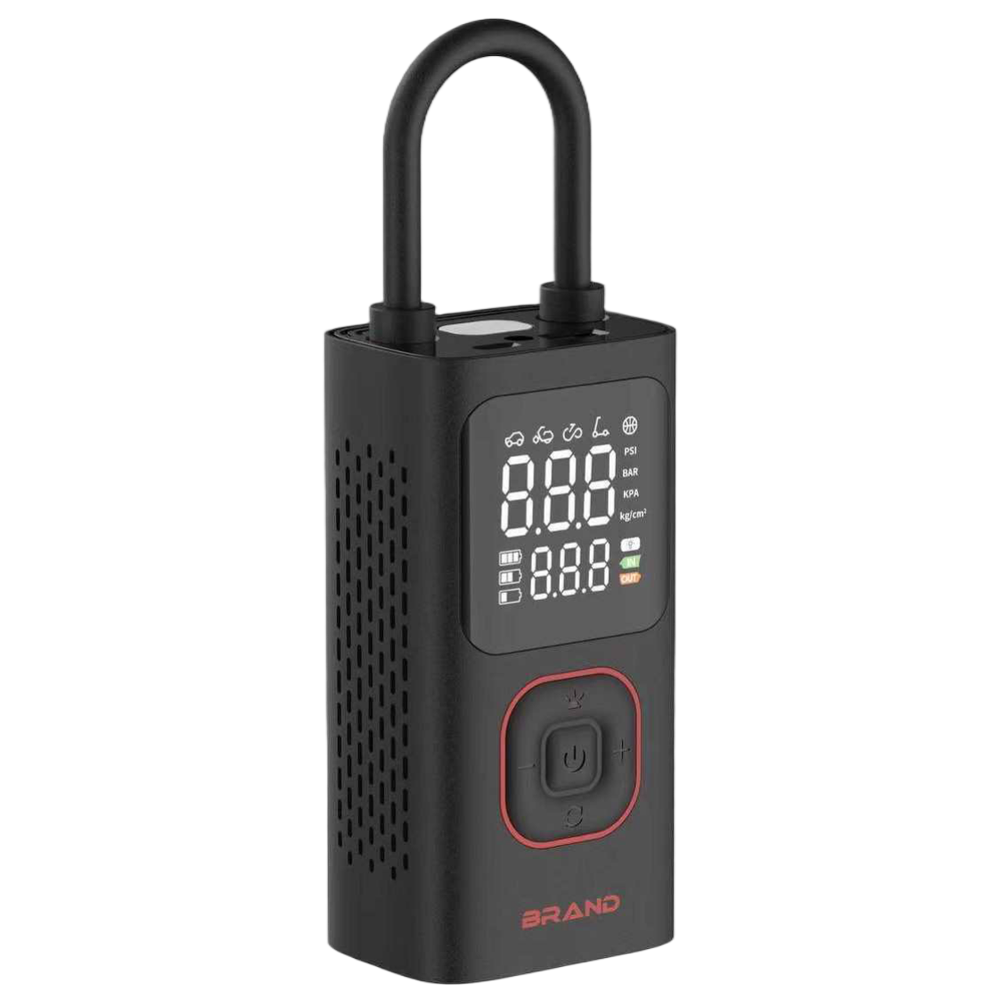
AC/DC, 12 V or battery: three different products
- AC/DC inflators run from a wall socket or a car socket. They suit workshop and household use, and they are the easiest to certify for a fixed market.
- 12 V inflators run only from the cigarette socket. Lowest cost, but the cord length and the socket fuse become the limiting factors.
- Battery inflators are cordless and sell on convenience. They carry a lithium pack, so transport documents and standby self-discharge become part of the specification.
Do not treat these as one product line with options. The motor, the housing, the cooling and the certification path all change. If you are building a range, decide the split first and negotiate each family separately.
Shipping a lithium product
| Document / rule | When it applies |
|---|---|
| UN38.3 test summary | Lithium cells or packs, including packs installed in equipment |
| MSDS | Requested by nearly every forwarder and airline, whatever the chemistry |
| State of charge limit | Air freight normally requires cells at or below 30% state of charge |
| Class 9 label and packing instruction | Standalone batteries and some battery-in-equipment configurations |
Quality gates to write into the purchase order
- Incoming cell inspection: capacity check and internal resistance on the received lot, with the record kept.
- Aging: a charge-discharge cycle before assembly, so weak packs fail in the factory rather than in the field.
- 100% function test: every unit switched on, charged and, for inflators, pressure-tested against a gauge.
- Carton drop and stacking: a recorded test, not a verbal assurance.
- Pre-shipment inspection: AQL sampling with photos of the actual cartons and labels.
A workable order flow
Sample and approve in writing, place the order with the specification attached as an annex, confirm the label and manual artwork, then book freight only after the test records are in hand. For repeat orders, re-confirm the battery supplier — it is the component most likely to be substituted between runs.